A weekend goes badly. Two people look up their Aztec day-signs, find a blog that calls the pairing “challenging,” and treat the adjective as a referee. The 260-day count can hold two profiles. It cannot hold a verdict.
Aztec day-sign compatibility, as a modern practice, compares two Tonalpohualli day-names — a sign plus a number from the 13-day cycle — as two profiles, not as a court. The historical count was a ritual and calendrical machine. Couple-scoring is a later overlay. If you want the two-date product named first, start with what a relationship reading is. After any pairing that starts to sound like a sentence: how to read a relationship reading.
How the count itself meshes — twenty signs against thirteen numbers, tiled by trecenas — is how the Tonalpohualli works.
Two day-names, not a traffic light
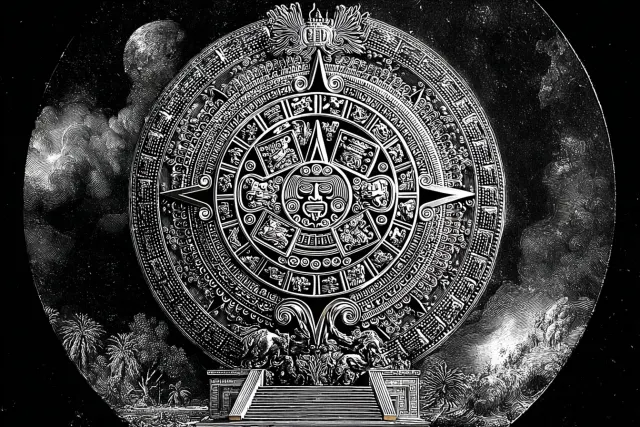
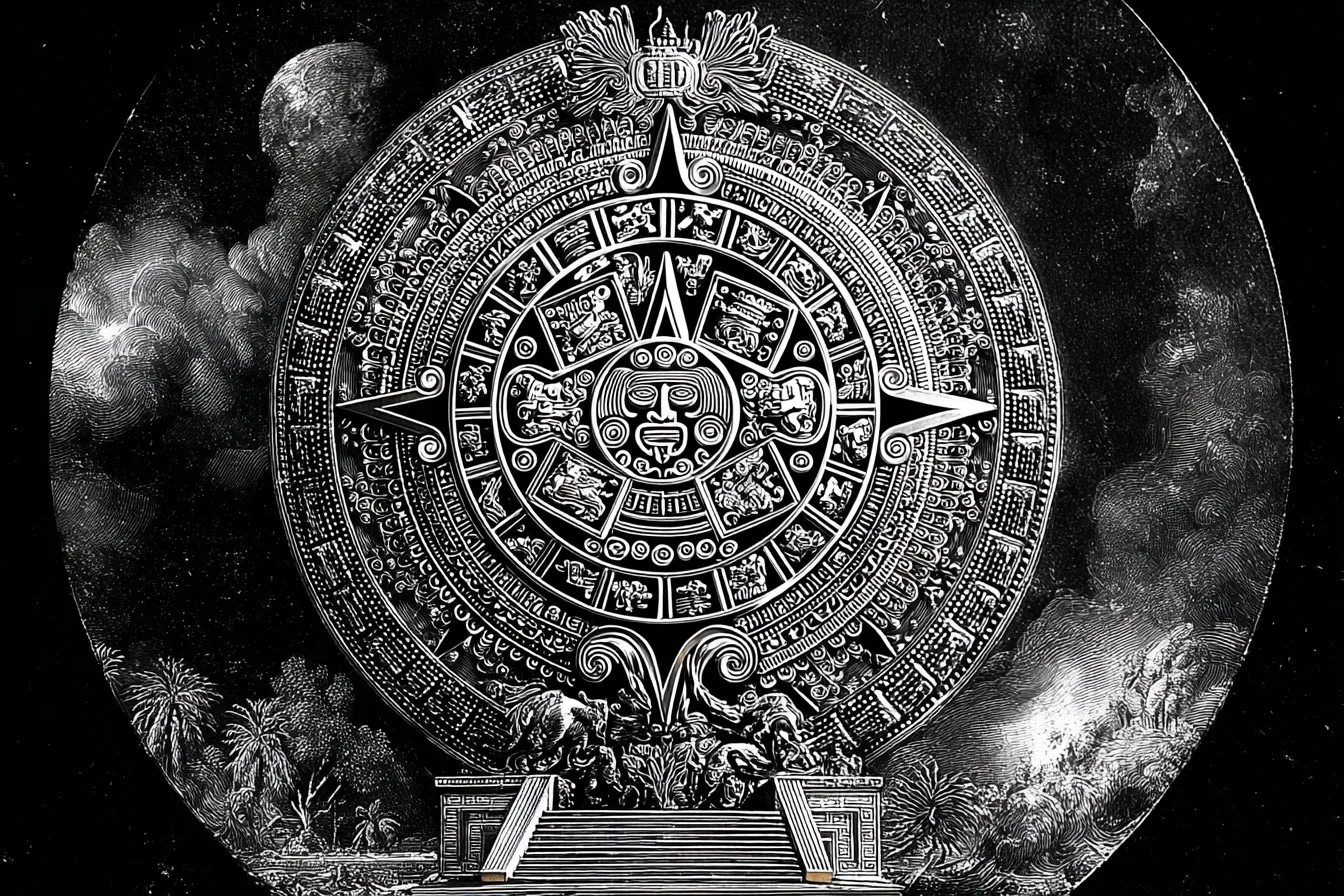
Each day in the Tonalpohualli carries a sign (Cipactli, Ocelotl, Xochitl, and the rest of the twenty) and a number from 1 to 13. A person’s “day-sign” in modern popular use is usually the sign-and-number of their birth date in that count. Putting two of those names side by side can be a comparison of two calendrical profiles. Turning the pair into a yes, a no, or a heart rating is a product decision.
| What you are looking at | What it can name | What it cannot name |
|---|---|---|
| Two day-signs (sign + number) | Two positions in a 260-day cycle | Commitment, kindness, or a future |
| Shared or neighboring trecenas | A possible similarity of day-count neighborhood | Whether the week will be easy |
| A modern “compatible / challenging” table | Someone’s pairing convention | A historical courtship law |
| A percentage built from two signs | A collapsed graphic | Which rule produced the number |
This page will not walk sign-by-sign through twenty pairings. Finite pair catalogs turn a count into a poster. The job here is to keep two profiles from becoming a stamp.
The Tonalpohualli is also not the Maya Tzolkin under another brand, even where the 260-day structure rhymes. If you are holding a Kin number and a Mexican day-name and trying to elect a winner, you have already left both counts. A related comparison of Kin and Western synastry is Mayan Kin vs Western synastry.
A fictional weekend
Rosa and Mateo, invented for this page, spend a Saturday fighting about a borrowed car and a missed call. On Sunday Rosa looks up Cipactli and Ocelotl, finds a page that calls the pairing “predator and earth-monster, high friction,” and forwards it. Mateo replies with a different page that calls any 1-and-1 number pairing “intense, therefore serious.”
Both pages used the same two birthdays. Both skipped the Saturday. Cipactli can be read as a beginning, a mouth, a first-day figure in a tradition of day-books. Ocelotl can be read as a jaguar day with its own ritual associations. Neither figure attended the missed call. Neither can tell you who had the keys.
The honest use is to put the blogs down and describe Saturday without them. Who borrowed the car. Who did not pick up. Who always explains last. Then, if a sentence about “starting versus stalking a problem” still fits as language, keep that sentence. If it only fits as a way to call the other person a jaguar, drop it.
A second lookup to find a kinder table is shopping. A third to average the first two is still shopping.
What a profile pairing can hold
It can give you a small vocabulary for two day-count positions. It can remind you that a 260-day machine is not a Sun-sign column. It can show you where a modern writer added a romance plot the count did not keep.
It cannot verify another person’s feelings. It cannot tell you whether a relationship will last. It cannot assign blame in a way that excuses you from returning a car or returning a call.
Historical specialists used the count for day quality, ritual timing, and a larger divinatory literature than a dating blog can hold. Keep that gap visible. An app that offers “your Aztec match” from two dates is doing a thinner job — a reason not to treat the output as a priestly verdict.
Birth time is usually irrelevant to a day-sign taken from a civil date. Calendar conversion, time zone, and whether the local day was counted from midnight or from a different boundary can still move a person across a sign. If a conversion is uncertain, leave it uncertain. Do not pick the sign that makes a pairing look kinder.
When to add other maps
A Tonalpohualli pairing is one dialect. Western synastry, numerology, and BaZi organize the same civil dates by different rules. They can sit beside two day-names without becoming four tests of one hidden score.
Open the day-count when you want that specific vocabulary and you can tolerate a modern overlay on a historical machine. Open a multi-engine date report when the question is larger than two day-names and you want the engines labeled. How to pick a product rather than a poster: how to choose a compatibility reading.
Whisper’s Relationship Reading is a saved written report that uses Western astrology, BaZi, and numerology together with the context you type. It is not a Tonalpohualli calculator and it is not a live session. Birth time and city are optional. A free preview follows Google sign-in, with no card required. The optional full reading is a US$29 one-time purchase, saved in My Readings, with no membership. The text is generated for personal reflection.
Create a free preview of your relationship reading.
Bring Saturday. Two profiles need a missed call that actually happened.
Questions readers ask
Did historical sources score couples by day-sign?
Day-books and ritual literature are not modern dating tables. Treat couple-scoring as a contemporary product, then read it as a comparison of two names, not as recovered law.
Is a “challenging” pairing a reason to stop?
No. An adjective on a blog is a convention. Describe the weekend. Ask the other person.
Do I need birth times?
Usually not for a day-name taken from a date. You do need a conversion you can defend. If the day boundary is unclear, say so.
Is this the same as Mayan Kin matching?
Related structure, different literature and names. Do not average a Kin and a Tonalpohualli sign into one “Mesoamerican score.”
Relationships
Understand your connection, differences and next conversation. Start with a free preview.
Explore this readingGoogle sign-in · No card for the preview · See the series page for full reading availability and price