
Stories
How oracles shaped history, culture, and the people who consulted them.
The Chinese Emperor Who Banned His Own Astrologers
A peasant rebel rose to found a dynasty partly on the strength of omens and prophetic allies who declared he carried Heaven's favor. Once he held the throne, he made it a capital crime for anyone else to read the sky.
How the Tarot Reached Japan: The Unexpected Journey of a Western Oracle
Japan had a four-hundred-year relationship with European playing cards before tarot ever arrived — and tarot, when it came, had nothing to do with any of it. Two card histories ran in parallel for centuries without touching.
Karl Ernst Krafft: The Astrologer Who Predicted the War and Couldn't Predict His Own End
In November 1939, a Swiss astrologer's warning about Hitler's safety appeared to come true within days — and it made him useful to the Nazi propaganda machine for exactly as long as he was useful, and not one day longer.
Abraham Lincoln and Spiritualism: The Séances in the White House
Mary Todd Lincoln held séances in the Red Room trying to reach a dead son. Abraham Lincoln sat in on at least one of them — not, by most accounts, as a believer, but as a husband keeping watch over his wife and the people around her.
John Dee: The Mathematician Who Read the Stars for Elizabeth I
Dee chose the date of Elizabeth I's coronation by astrological calculation. He also owned England's largest library, advanced English mathematics and navigation — and spent his final years convinced that angels were speaking to him through a convicted con man. All of this was the same person.
Nikola Tesla and Number Mysticism: The Logic Behind His Obsessions
Tesla counted his steps, demanded hotel rooms divisible by three, and calculated the cubic volume of his dinner before eating it. The standard explanation is OCD. The numbers themselves suggest something closer to a private numerology — one he never quite admitted to.
Carl Jung's I Ching Practice: What His Letters and Private Notes Reveal
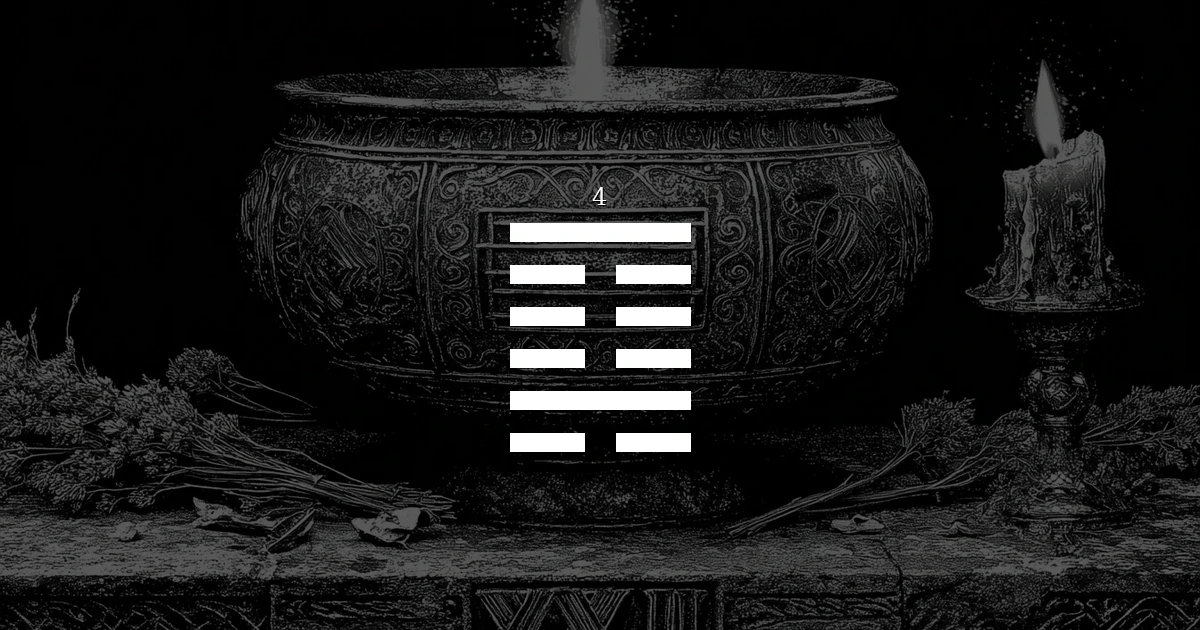
Carl Jung consulted the I Ching for decades — with patients, alone, and in correspondence with some of the twentieth century's most formidable minds. What his letters and private notes reveal is not mysticism but method.
The I Ching Reaches the West: How Richard Wilhelm's Translation Changed Everything
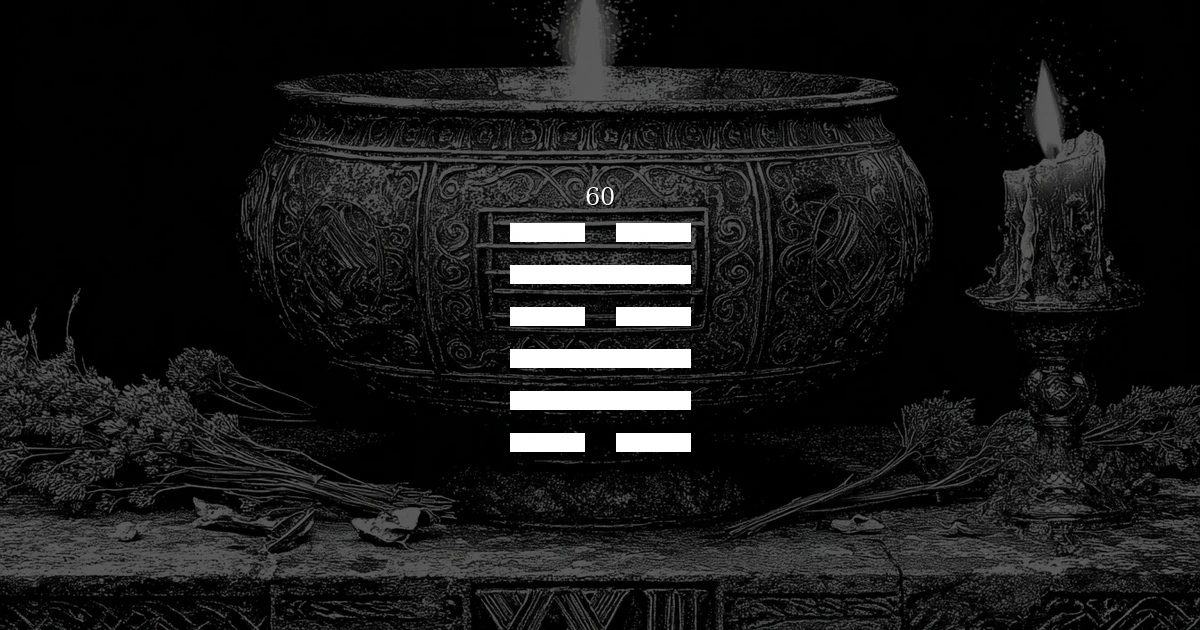
Richard Wilhelm went to China to convert souls. He came back with the I Ching. How a German missionary's thirty-year immersion produced the translation that brought one of history's most sophisticated thinking tools into the Western imagination.
Tycho Brahe: The Astronomer Who Never Stopped Being an Astrologer
Tycho Brahe built the most precise astronomical instruments in pre-telescopic history — and cast horoscopes until the end of his life. His story refuses the tidy narrative that science and astrology simply parted ways.
Winston Churchill and Astrology: What the Wartime Leader Consulted
Churchill was no believer in astrology — but his wartime government ran an operation to track exactly what Hitler's astrologer was predicting. The story reveals how seriously the Allies took the question of what oracles do to the people who consult them.
The Astrologer Who Predicted His Own Death (And Was Right)
Several astrologers in history have predicted their own deaths with notable accuracy — most famously through the practice of calculating their own death charts and then acting in ways consistent with those predictions. The stories are stranger and more interesting than simple 'the stars knew' narratives suggest.

I Used 5 Astrology Apps for 30 Days: Here's What Was Useful
Thirty days, five astrology apps, one birthday entered more times than felt healthy. A practical account of what each app actually delivered, what got ignored after week one, and what — if anything — was genuinely useful.
The Astrology of the French Revolution: What Three Astrologers Predicted
The French Revolution was preceded by a wave of astrological prediction — in almanacs, pamphlets, and private consultations, French astrologers saw major disruption coming and said so. Here's what they predicted, how accurate they were, and what the episode reveals about the relationship between astrology and political crisis.
Babylon's Sky Watchers: The Priests Who Invented Western Astrology
Western astrology did not begin with the Greeks. It began in Babylon — with priests who watched the sky from ziggurat platforms for centuries, building an astronomical database that became the foundation for every horoscope ever cast. Here's what they actually observed, how they recorded it, and how their work survived the collapse of their civilization to shape the astrological tradition still practiced today.
The Woman Who Brought BaZi to the English-Speaking World
For most of the twentieth century, BaZi — the Four Pillars of Destiny — was essentially inaccessible to anyone who didn't read classical Chinese. The system's transmission to English-speaking audiences is the story of a small number of remarkable individuals who undertook the difficult work of translation, adaptation, and modernization. Here's how it happened.
How BaZi Shaped Business Decisions in 20th-Century Hong Kong
In the decades when Hong Kong transformed from a colonial trading post into one of the most dynamic financial centers in the world, its business culture ran on two parallel systems: Western finance and Chinese metaphysics. BaZi consultations, feng shui assessments, and auspicious date selection were not marginal practices — they were embedded in how major decisions got made.
The I Ching and the Atomic Bomb: How Physicists Came to Consult an Ancient Text
In the middle of the twentieth century, as physicists dismantled the classical picture of a deterministic, mechanical universe, several of them turned to the I Ching — not as an alternative to science, but as a language for concepts their physics needed and their vocabulary hadn't yet provided. This is the story of that strange convergence.
Jung and the I Ching: The Letter That Changed Philosophy
In 1950, Carl Jung wrote a preface that shook Western philosophy: an endorsement of the I Ching as something genuinely worth understanding. How a dream, a dead fish, and a 3,000-year-old oracle changed the way the modern world thinks about meaning.
Kepler Was an Astrologer: The Uncomfortable History of Astronomy
Johannes Kepler discovered the laws of planetary motion that Newton would later mathematize into gravitational theory. He also cast horoscopes for a living, predicted the fates of nations from planetary conjunctions, and spent years trying to save his mother from a witchcraft trial. The separation of astronomy from astrology was not a clean break — it was a long, messy, intellectually honest struggle.
Why the Mayan Calendar Survived Colonization (Hidden in Plain Sight)
The Spanish colonization of Mesoamerica was comprehensive and brutal — temples destroyed, codices burned, ritual practices suppressed. And yet the 260-day Mayan sacred calendar has been in continuous, uninterrupted use from before the conquest to the present day. Here's how it survived, who carried it, and what its survival means.
The Nakshatra System and the Mahabharata: How Timing Won the Battle
The Mahabharata — one of the longest epic poems ever composed — is saturated with astrological timing. The choice of when to begin the Kurukshetra war, the reading of omens before battle, and the role of the Nakshatra system in determining auspicious and inauspicious moments runs through the entire epic. Here's what the text actually says — and what it reveals about how Vedic civilization understood time.
Napoleon's Astrologer and the Battle He Should Have Skipped
Napoleon Bonaparte was not a superstitious man — he was a child of the Enlightenment who mocked mysticism and trusted mathematics. And yet he kept an astrologer, consulted fortune-tellers at pivotal moments, and may have ignored a warning about the day that ended his empire. Here's the complicated relationship between the greatest military mind of his age and the tradition he publicly disdained.
How Nine Star Ki Became Japan's Most Trusted Personal Calendar
Nine Star Ki — known in Japanese as Kyusei Kigaku — has been woven into Japanese daily life for centuries. From the imperial court to the business district, from the advice columns of major newspapers to the timing of corporate decisions, it became something Western astrology never quite achieved: a genuinely popular personal timing system integrated into a modern industrial society.

The Oracle at Delphi: How Ambiguous Prophecy Built an Empire
For nearly a thousand years, the Oracle at Delphi was the most consulted source of guidance in the ancient Mediterranean world. Kings, generals, and city-states sought her counsel before every major decision. The prophecies she delivered were almost always ambiguous — and that ambiguity, it turns out, was the point.
The Astrologer Who Advised Ronald Reagan From the White House
After the 1981 assassination attempt on Ronald Reagan, Nancy Reagan began consulting a San Francisco astrologer named Joan Quigley to help schedule the president's public appearances. For seven years, an astrologer had quiet but documented influence over the timing of decisions made at the highest levels of American power.
The Tarot's Secret Origin: Playing Cards, Aristocrats, and One Occultist
The Tarot was not invented in ancient Egypt. It was not brought to Europe by Romani travelers from India. It was not the secret wisdom of the Kabbalah dressed in playing card form. It was invented in northern Italy in the early fifteenth century as a card game for aristocrats — and then, through a series of accidents and inspired misreadings, became the most influential divinatory system in the Western world.
How Vedic Astrology Survived 5,000 Years
Vedic astrology — Jyotisha — has been practiced continuously for longer than almost any intellectual tradition on earth. It survived empire, colonialism, and scientific modernity. Understanding how tells you something important about what it actually is.

How the Vikings Used Runes: Not Magic, But a Decision Framework
The popular image of Viking rune-casting — a shaman throwing bones over a fire, reading cosmic messages — tells us more about modern romanticism than about how the Norse actually used runes. The historical record reveals something more interesting: a literate, practical people who used a symbol system for communication, commemoration, and structured deliberation.
How BaZi Shaped Business Culture in Hong Kong's Golden Era
In Hong Kong's postwar boom decades, BaZi wasn't a fringe practice — it was woven into how serious businesspeople made serious decisions. Hiring, partnerships, property, timing: the Four Pillars were a tool of the boardroom as much as the temple.