A good decision tarot spread clarifies the question, names what you value and separates what you can find out from what you cannot. The cards work best as prompts for your own thinking. The decision stays with you.
Why a yes-or-no answer is not enough
When you feel stuck, the problem is often not a lack of options but a tangle of feelings, facts and fears. A decision spread untangles them one at a time, which is often what gets you moving again.
The spread
- The real question. What am I actually deciding?
- What I value here. What matters most?
- What I know. Which facts are clear?
- What I cannot know yet. Which uncertainty must I accept?
- A next step. What can I do now?
Shuffle or mix while holding the question in mind, then lay out one card for each position. Write down your first reaction before looking up any meaning. Your reaction is often the most useful part of the reading.
How to phrase the question
- “What am I really deciding?”
- “What matters most to me in this situation?”
- “What can I do now, even if I cannot know everything?”
Clear, open questions tend to give more useful readings than yes-or-no questions.
How to read it
The Two of Swords in the real question can suggest you are avoiding information or a feeling. Justice in what I value here often points to fairness and accountability. The Hanged Man in what I cannot know yet can describe a pause that may be necessary before clarity arrives.
Look for themes across the positions rather than a single “answer”. If two positions point in the same direction, notice that. If they contradict each other, that tension is often where the real decision lies.
A worked example
Ben feels stuck about whether to accept a promotion. The real question shows the Two of Swords; what I value here shows Justice; what I cannot know yet shows the Hanged Man. Ben realises the real question is whether the promotion fits his values, not whether he can do it, and asks for a week to reflect before answering.
Practical questions to answer as well
A reading is most useful alongside the facts. Before deciding, consider:
- Write the question in one sentence before you begin.
- Separate facts from fears in your notes.
- Decide which unknowns you can research.
- Set a date to act or review.
If the decision is urgent and involves safety, health or legal matters, seek professional help first.
Common mistakes with this question
- Starting without writing the question down.
- Mixing facts and fears in the same notes.
- Ending the reading without choosing a next step.
A reversible next step
Do the one thing the next step card suggests within the next few days, even if it is very small.
Small, reversible steps give you real information. After you take one, come back to your notes and see whether anything has changed.
When a structured decision reading helps
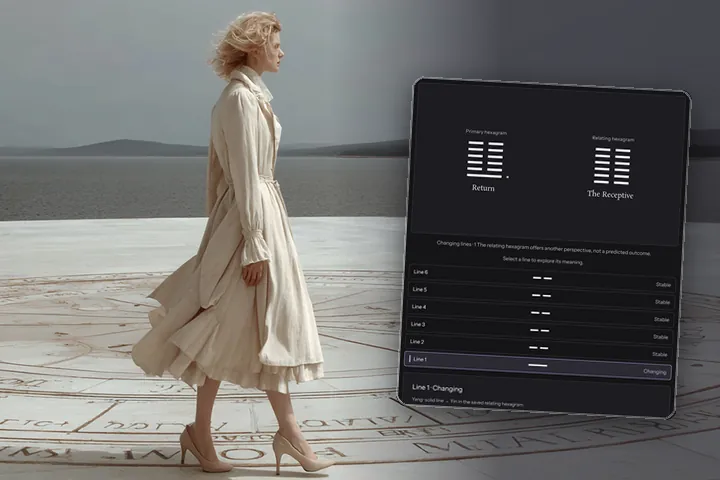
If you keep circling the same choice, a structured reading that looks at both options, your values and the unknowns can help you move forward. Whisper’s Crossroads & Choices Reading does this with an I Ching hexagram, three Major Arcana tarot cards and an Elder Futhark rune. It needs no birth details and starts with a free preview.
FAQ
What is the best tarot spread for decisions?
A spread that looks at your values, the facts and the unknowns tends to work better than a yes-or-no pull. For two clear options, try the two paths spread.
Should I use reversed cards in a decision spread?
You can. Some readers find reversals useful for highlighting blocks; others prefer to keep decision readings simple and upright.
Crossroads & Choices
Two paths, read side by side: your I Ching cast, a Tarot card for each path and a rune, which way they lean, and one small step for this week. Start with a free preview.
Explore this readingGoogle sign-in · No card for the preview · See the series page for full reading availability and price