Nakshatra
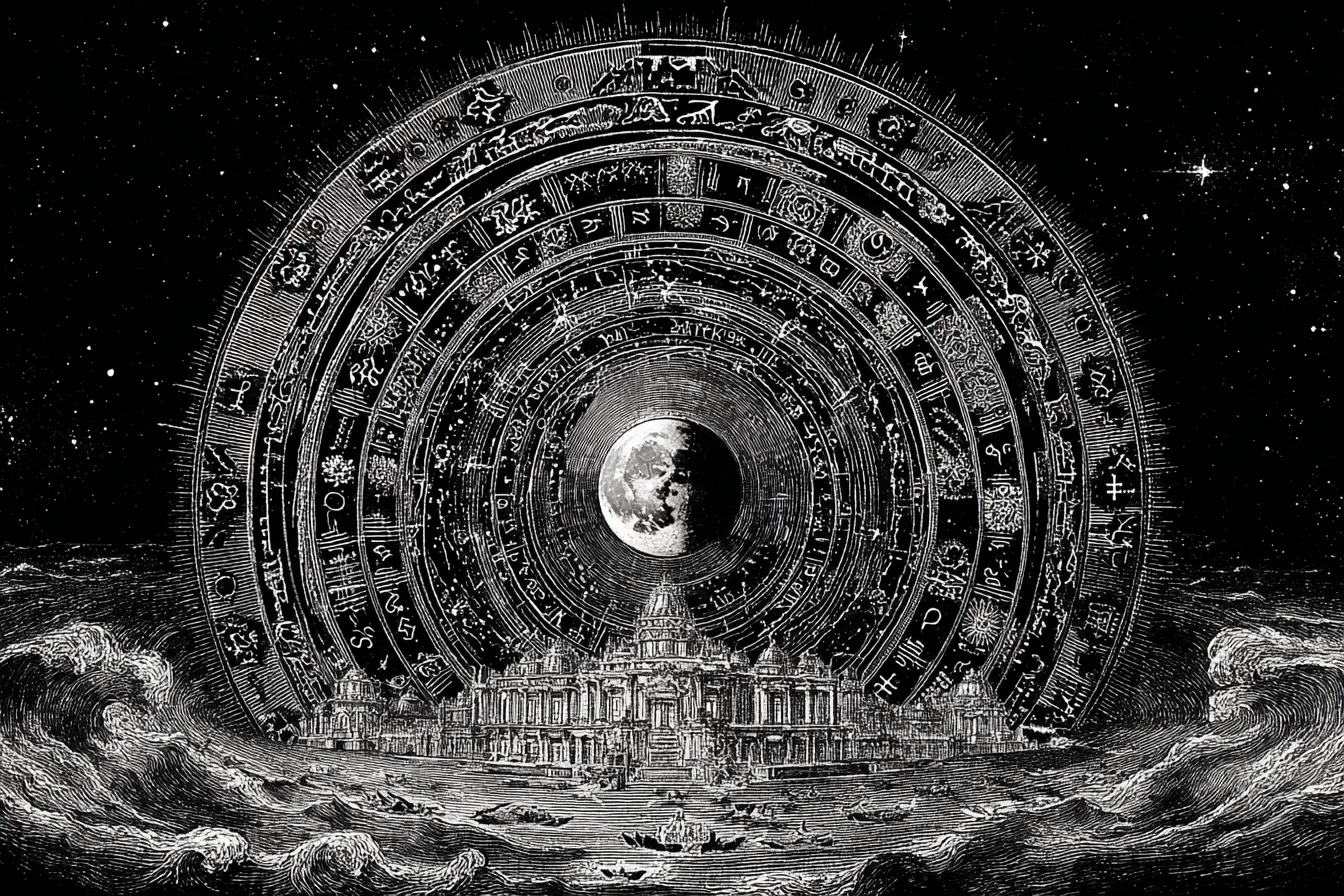
The Nakshatras are Vedic astrology's 27 lunar mansions — equal divisions of the ecliptic that track the Moon's nightly position. Where Western astrology centers the Sun, Vedic astrology gives the Moon primary interpretive weight, and the Nakshatra the Moon occupies at birth is one of the most personal indicators in the chart. Each Nakshatra carries a presiding deity, a symbol, a ruling planet, and a distinct quality of energy that the Sun sign alone doesn't capture. The system has been in continuous use in India for over 2,000 years.
New here? Start with The 27 Nakshatras: Complete Guide to Every Lunar Mansion or the reference series The 27 Nakshatras .
Reference
Articles
- 27 nakshatras explained
- nakshatra meanings vedic astrology
The 27 Nakshatras: Complete Guide to Every Lunar Mansion
The 27 Nakshatras are Vedic astrology's lunar mansions — the signs the Moon passes through on its monthly journey. More precise than sun signs and more personally revealing than Western astrology allows, each Nakshatra describes a distinct quality of mind, feeling, and timing.
- what is nakshatra
- nakshatra calculator
What Is Nakshatra? The 27 Lunar Mansions of Vedic Astrology
Western astrology tracks the sun through 12 signs. Vedic astrology also tracks the moon through 27 — called Nakshatras. These lunar mansions are older, more granular, and in many ways more personal than any sun sign.
- nakshatra porutham beyond guna
- porutham vs guna milan
Nakshatra Porutham Beyond Guna: Matching Without Collapsing to a Number
Nakshatra porutham compares lunar mansions across several factors. The 36-point Guna total is a later collapse, not the method itself. Read the factors, not the screenshot.
- nakshatra lord and self map
- nakshatra planetary lord
Nakshatra Lord and the Self-Map: An Extra Handle, Not a Boss
A nakshatra lord is the planet that administers a lunar mansion in the Vimshottari scheme. In a self-map it is an extra handle, not a boss and not a second personality.
- combining nakshatra and celtic trees
- nakshatra vs celtic tree
Combining Nakshatra and Celtic Trees Without Making One Type
A lunar mansion and a birth tree do not share a sky or a season. Learn how to hold both on a self-question without fusing them into one type, and why the tree calendar must disclose its reconstruction.
- nakshatra reading without twenty seven pages
- nakshatra without 27 signs
A Nakshatra Reading Without Twenty-Seven Pages
A self-reading needs one Moon mansion against one question. Twenty-seven posters are a catalog. Here is why a sitting should not sell the full set as self-knowledge.
- rahu ketu nakshatra and self map
- rahu nakshatra meaning
Rahu-Ketu Nakshatra and the Self-Map: Hunger and Release Language
The lunar nodes occupy mansions too. In a self-reading those placements can name hunger and leftover — not a Rahu period, a curse, or a second personality.
- nakshatra vs life path number
- lunar mansion vs numerology
Nakshatra vs Life Path Number: Two Maps, Different Units
A lunar mansion is a sky slice; a Life Path is a reduced birth date. They can both talk about tendency. They do not share a unit and should not be fused into one type.
- nakshatra and life view
- lunar mansion meaning
Nakshatra and Life View: Meaning-Style, Not a Fate Script
A lunar mansion can describe how you tend to frame what counts as meaningful. That is life-view language — not a purpose assignment, a vocation, or a fate.
- janma nakshatra in a reading
- birth star vedic reading
Janma Nakshatra in a Reading: The Birth-Star as a Starting Handle
Janma nakshatra is the Moon mansion at birth — a starting handle for tendency language in a self-reading, not a throne, a transit, or a life script.
- nakshatra without identity collapse
- nakshatra not personality
Nakshatra Without Identity Collapse: A Handle, Not Who You Are
A lunar mansion is a Moon handle. It becomes a costume when it replaces memory, choices, and other people. Hygiene for janma nakshatra, not a twenty-seven-sign shop.
- how to read nakshatra for yourself
- read my nakshatra
How to Read Nakshatra for Yourself: One Mansion, One Question
A self-read of a lunar mansion starts with a question you can test this week, then one birth-star image. Here is a walk order that refuses a twenty-seven-page costume.
- nakshatra pada and self description
- nakshatra pada meaning
Nakshatra Pada and Self-Description: A Quarter, Not a Secret Self
A nakshatra pada is a 3°20′ quarter of a lunar mansion. In a self-reading it can refine a sentence — it cannot reveal a hidden identity or settle who you are.
- moon nakshatra vs moon sign
- nakshatra vs rashi
Moon Nakshatra vs Moon Sign: Twenty-Seven Is Not a Better Costume
A Moon nakshatra and a Vedic Moon sign describe the same Moon at two grains. The mansion is finer vocabulary, not a more accurate personality or a replacement rāśi.
- nakshatra in a self understanding reading
- lunar mansion self reading
Nakshatra in a Self-Understanding Reading: One Mansion, Not a Type
A nakshatra enters a self-understanding sitting as Moon-mansion language for tendency and self-recognition — not a twenty-seven-way personality or a destiny stamp.