
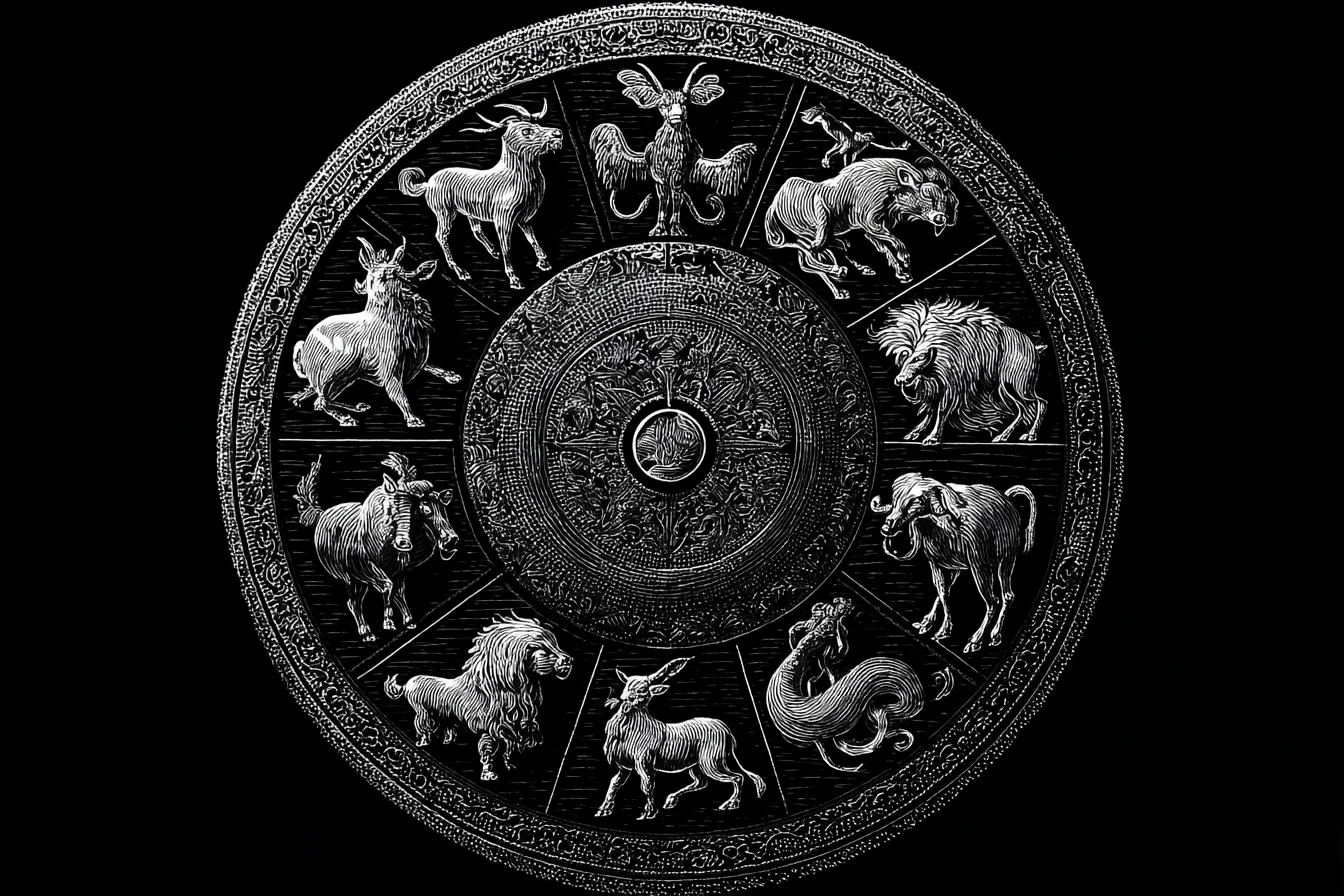
In 2012, a significant portion of the English-speaking internet became briefly convinced that the Maya had predicted the end of the world. The date December 21, 2012 — the completion of the Maya Long Count’s 13th b’ak’tun — was treated in popular media as an apocalyptic prophecy, a cosmic warning encoded in an ancient calendar system.
The Maya had predicted no such thing. What they had done was considerably more impressive, and considerably less dramatic: they had constructed one of the most accurate astronomical tracking systems ever developed by a pre-industrial civilization, using naked-eye observation, patient record-keeping across generations, and a sophisticated mathematical framework built on a base-20 number system that included the concept of zero centuries before its independent development in India.
The 2012 episode is worth noting not because it was surprising — popular culture has a long history of projecting whatever it needs onto ancient systems — but because it illustrates the gap between what the Mayan calendar actually represents scientifically and how it tends to be discussed. That gap is the subject of this article.
What the Maya Actually Built
The Maya operated multiple interlocking calendar systems simultaneously. The two most relevant for understanding both the astronomy and the modern divination use are the Tzolkin and the Haab, which together form the Calendar Round, and the Long Count.
The Haab is a 365-day solar calendar divided into 18 months of 20 days each, plus a 5-day period called Wayeb. It is a practical agricultural and civic calendar, reasonably well-aligned with the solar year — though the Maya were aware it did not include the fractional correction that a leap year system would provide. They did not need to fix this because they tracked the discrepancy separately rather than embedding a correction into the calendar’s structure.
The Tzolkin is a 260-day sacred calendar with no direct astronomical correlate that has been definitively established. The leading hypotheses for its origin include: the approximate human gestation period (266 days, close to 260), the agricultural growing season at Mayan latitudes, the interval between the two annual solar zenith passages at the latitude of key Maya ceremonial centers (approximately 260 days at 15°N), and a mathematical property of the Venus cycle. Of these, the zenith passage hypothesis has attracted the most recent scholarly attention, as it would give the Tzolkin a direct astronomical grounding at the specific geographic location where it appears to have originated.
The Calendar Round combines the Tzolkin and Haab in a 52-year cycle — the interval before the same Tzolkin day and Haab date coincide again. This 52-year cycle held enormous ceremonial significance and was tracked with extreme care. Major civic events were timed to Calendar Round positions.
The Long Count is a linear count of days from a mythological creation date (corresponding to August 11, 3114 BCE in the most widely accepted GMT correlation). It uses five units — kin (1 day), winal (20 days), tun (360 days), k’atun (7,200 days), and b’ak’tun (144,000 days) — to create a count capable of expressing millions of years without ambiguity. This is the calendar that produced the 2012 date. The completion of the 13th b’ak’tun was a significant calendrical milestone, analogous to an odometer rolling over — not a predicted terminus.
The Venus Table: Where the Astronomy Becomes Extraordinary
The most scientifically remarkable achievement in the Maya calendar record is the Venus Table in the Dresden Codex, one of only four surviving pre-Columbian Maya books.
The synodic period of Venus — the interval between successive appearances of Venus as morning star, as seen from Earth — is 583.92 days. The Maya calculated this period as 584 days, an error of less than 0.08 days per cycle. Over the 37,960-day Grand Cycle used to resynchronize the Venus table with the calendar, this error accumulates to approximately three days — which the Dresden Codex appears to correct for, suggesting the Maya were aware of the discrepancy and had developed empirical correction procedures.
To appreciate what this represents: the Maya arrived at this figure through naked-eye observation, without telescopes, without mechanical timekeeping more precise than careful solar and stellar observation, without any communication with Old World astronomical traditions, and over an observation period spanning multiple generations. The Dresden Codex Venus Table is one of the most accurate records of planetary motion produced by any pre-modern civilization.
They also tracked the synodic periods of Mars and, with somewhat less precision, Jupiter and Saturn. Eclipse prediction tables in the Dresden Codex demonstrate an understanding of the saros cycle — the approximately 18-year interval after which eclipse geometry repeats — that European astronomers did not formalize until the early modern period.
This is not mythology dressed as astronomy. This is astronomy, developed independently, achieving results that held up to modern verification.
The Gap Between Historical Achievement and Modern Divination Use
The modern use of the Mayan calendar in divination — assigning Tzolkin day signs and tones to birth dates, interpreting their associated qualities as personality descriptors — is a relatively recent development, largely shaped by the New Age appropriation of Mayan material in the latter half of the 20th century.
The historical Maya did associate Tzolkin positions with personality and destiny. Day-keepers (ajq’ij) in the K’iche’ Maya tradition, which has maintained living continuity with pre-Columbian practice, use the Tzolkin for birth-day consultations and for timing guidance to this day. This is not a modern invention.
What is more recent, and more scientifically complicated, is the specific system of 20 day signs and 13 tones as used in New Age contexts — where the original K’iche’ and Yucatec Maya interpretive traditions have been significantly modified, systematized, and sometimes hybridized with other frameworks (particularly the I Ching, astrology, and Human Design). The personality descriptions attached to Tzolkin positions in popular English-language Mayan astrology books frequently do not match the interpretations used by living K’iche’ day-keepers.
This is a factual accuracy problem separate from the question of whether Tzolkin-based personality descriptions have validity. It means the modern divination use is not a direct continuation of the historical practice — it is an adaptation, shaped as much by 20th-century Western esoteric culture as by Maya tradition.
What Research Can Say About the Tzolkin as a Personality System
Direct scientific testing of Tzolkin-based personality claims is essentially absent from the literature. The system has not attracted the same research attention as Western astrology, partly because its Western user base is smaller and partly because the scholarly study of Mesoamerican calendrics has focused on historical and astronomical questions rather than psychological ones.
The general findings from birth-timing research apply by analogy. Studies on Western sun signs have found no reliable personality correlations under rigorous testing conditions. Studies on Chinese zodiac year signs have found modest effects in culturally embedded contexts, consistent with self-fulfilling prophecy mechanisms. If those findings generalize to Tzolkin birth signs, the prediction would be: no reliable above-chance personality correlations in Western samples; possible modest effects in populations with genuine cultural continuity to Mayan day-keeping traditions.
The 260-day Tzolkin cycle itself has attracted some chronobiological interest. The human menstrual cycle averages approximately 29.5 days; nine such cycles approximate 265 days, close to the 260-day Tzolkin. If the Tzolkin did originate as a gestation calendar, it might carry a biological resonance that other calendar systems lack — a hypothesis that is currently speculative but not obviously implausible. No study has examined whether 260-day cycles produce measurable effects on human physiology or psychology.
What the Maya Were Actually Asking
Perhaps the most scientifically interesting thing about the Maya calendar system is the nature of the question it was built to answer.
Western astronomy from roughly the 17th century onward has been focused on prediction and control: understanding celestial mechanics well enough to predict positions, plan navigation, calculate gravitational forces. The Maya were also predicting — but the context of their prediction was different. They were not trying to control celestial events. They were trying to understand the texture of time: which periods carried which qualities, and how those qualities should shape human activity.
This is a different epistemological project from post-Newtonian astronomy, and it is not obviously inferior as a way of relating to temporality. The scientific framework most relevant to it is not celestial mechanics but perhaps chronobiology and temporal psychology — fields that examine how time structure affects human experience, wellbeing, and performance.
Research on circadian rhythms, seasonal affect, and temporal framing effects in decision-making all suggest that time structure matters for human psychology in ways that are not trivial. The Maya invested enormous institutional resources in understanding time structure. That the specific structures they identified may not map onto biological timescales does not mean the underlying inquiry was misguided.
The Astronomy Is Real; the Divination Is Separate
The most important scientific point about the Mayan calendar is one that popular discussion consistently conflates: the astronomical achievement and the divination system are related but distinct.
The astronomical achievement — the Venus Table, the eclipse predictions, the sophisticated multi-cycle calendar mathematics — is real, independently verifiable, and genuinely remarkable. It represents the output of sustained scientific observation across generations, and it holds up under modern scrutiny.
The divination system — assigning personality qualities and destiny to Tzolkin birth positions — is a separate layer built on top of the astronomical framework. It may have validity through mechanisms that personality research is only beginning to understand. It may reflect the accumulated observational wisdom of generations of day-keepers about human character. Or it may be a culturally transmitted interpretive framework whose accuracy is better explained by expectation and self-fulfilling prophecy than by the calendar positions themselves.
What’s not defensible is using the astronomical achievement to establish the credibility of the divination claims. “The Maya tracked Venus to within 0.08 days of accuracy” does not imply “therefore Tzolkin birth sign personality descriptions are reliable.” These are separate claims, requiring separate evidence.
The astronomical achievement earns the Mayan calendar system serious respect. The divination claims remain open questions — neither confirmed nor refuted by the science that would be needed to evaluate them properly.
What This Means for Contemporary Use
If you use the Tzolkin as a daily or birth-chart framework, the honest scientific position is this: you are engaging with a system developed by astronomers of extraordinary skill, adapted through layers of cultural transmission, and not yet subjected to the kind of rigorous personality research that would tell you whether its specific claims hold up.
The Tzolkin’s 260-day structure creates a fine-grained temporal vocabulary — 260 unique day-sign and tone combinations — that may function as a useful instrument for self-observation regardless of its causal mechanism. The day-keeping tradition from which it comes is one of the few divination practices with genuine unbroken historical continuity. And the astronomical competence demonstrated by the people who built the system is not in doubt.
Whether the personality and timing claims work in the way the tradition says they work — that remains an open question, which is a different thing from a closed one.